
In a world of rapid obsolescence, an eight-year-old KNX project is still going strong. Simon Buddle looks back at what was done right and what he would change now, given new developments.
I’m not sure why, but the Christmas rush seems to have started about four weeks early this year. I’ve seen decorations up for a month already and I wonder at the rationale of buying a tree in November. Surely all of the needles will have dropped by the actual day! I am the quintessential ‘Bah Humbug!’ at this time of year – pretty much loathing every toe-curling ‘yo-ho-ho’ and cringing at the thought of reindeer, mistletoe, and mince pies. Give me a hideaway and I’ll gladly run away for the duration. And to be honest, we often do.
However, there are a couple of bits I do enjoy. Movies for a start. Christmas isn’t complete without watching, ‘Life of Brian’ and for a little bit of nostalgia you can’t go wrong with ‘It’s a Wonderful Life.’
Throwaway tech
In the world of television, eight years is a lifetime. For context, HDTV through the terrestrial TV network was first transmitted in 2009, with the digital switchover being completed in 2016. I have technically overseen TV distribution systems that have started life as S-Video, upgraded to component video, then digital 720p and on up to 1080p. In every instance, it pretty much meant ripping out the old equipment and starting again. All of those technology transitions happened in under 17 years, and bar none, all of the products used would not work with today’s 4k systems.
Increased security
With KNX however, it’s a different story. It’s almost eight years to the day since I completed a project for a lovely client in a block of apartments in Hackney, London. The job was plant BMS, heating, and importantly, meter readings all done with KNX. The system harvests data for electricity, heating, hot water and cold water on both the tenant’s side and the landlord’s side. I was at the job site a few days ago and whilst doing the annual round of maintenance checks, the client asked me if there was anything I’d do differently now.
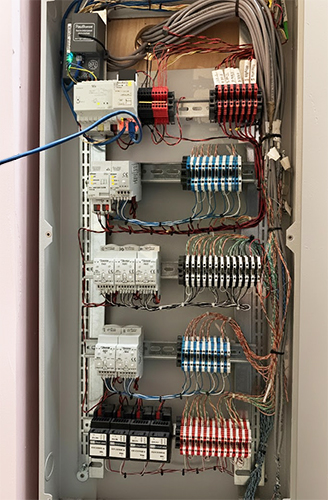
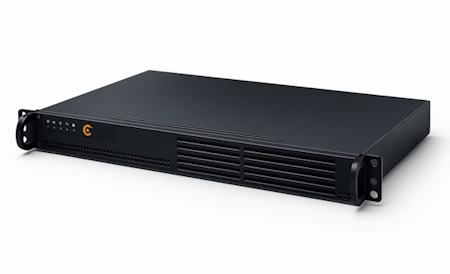
The answer is I would. Firstly, with the advent of KNX Secure, I would certainly put in secure line couplers. Whilst each flat has its own KNX line and line coupler, they are all still interconnected. Using KNX Secure at the line coupler level would prevent even the most ardent hacker from breaking through to the main line and on to any other flat. Secondly, I’d add KNX IP Secure by adding a new IP router. In so doing, I would be securing all of the communications on the mainline, central heart of the system.
Improved information gathering
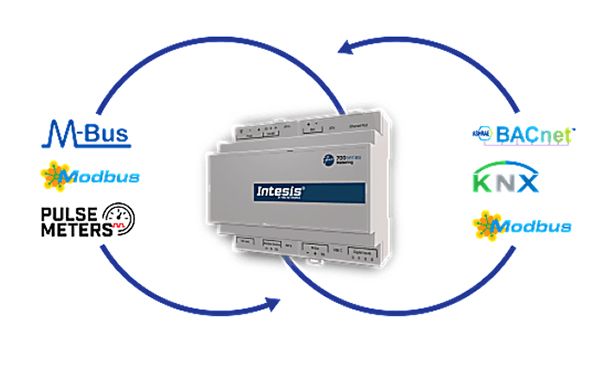
Another change I’d make is to force all of the electric meter readings to be done via M-Bus rather than pulse counting. Why? Well simply this; when you receive a meter reading using the M-Bus platform, the meter sends the actual kWh value as a whole number. For example, 1430kWh. When that value increases by one it then sends out 1431kWh. When you use pulse counting the pulse simply tells you to ‘add one.’ But surely, they’re the same thing – isn’t the outcome the same either way you ask? Yes, and yet no.
Here’s the issue. If, for whatever reason, the system is switched off, disconnected, or a meter is swapped out, then the pulses will be missed. Now the KNX reading and the meter reading are out of sync. Over a year this adds up and can lead to inaccurate information. If you are using M-Bus then even if the connection goes down for a period of time, when it comes back up, the meter will send out the correct value, and the two systems will be back in sync.
User interfaces improve, morph, and become more elaborate over time. The chosen interface at this job was a Comfort Click device. Eight years on, it is still running and is regularly remotely updated. Each month it emails the client with all of the meter readings gathered from the KNX bus. In addition, by use of unique profiles, each tenant can see their own meter readings, but no one else’s.
So yes, there are a couple of items I would upgrade to the latest technology. These would make the system both better in terms of security and more robust in terms of the information gathered. But overall, the system continues to perform as it did when it was first installed. And if I did upgrade it, I would be swapping like-for-like modules out. They’d fit in the same space and use the same wiring configuration. I look back on that system with a sense of nostalgia, and I also look back at the world of AV and think, if only…
Conclusion
In a whirlwind of ever-changing technology and throwaway electronics, KNX stands uniquely alone in its ability to continue to perform over time. It remains relevant decade after decade and indeed improves year on year. I challenge anyone to name a system that is backwards compatible, forwards compatible, running on the same cabling, still upgradeable and relevant for both 30-year-old technology, today’s technology, and tomorrow’s.
Simon Buddle CEng MIET, is a consultant for Future Ready Homes, a specialist in BMS and ELV services system design.