
By Simon Buddle
Learn how switching from proprietary gadgets to a manufacturer-independent system like KNX is the only way to build a smart home system that actually lasts.
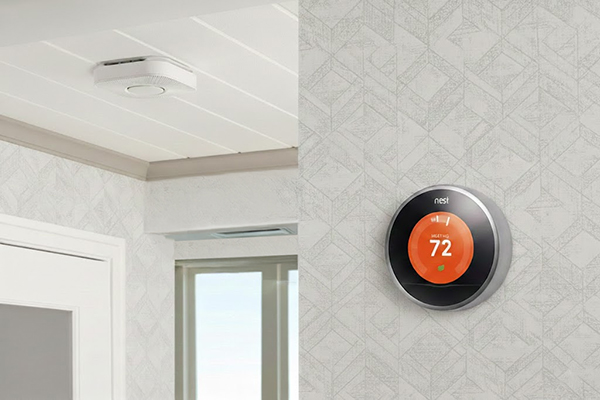
How many Google Nest thermostats does it take to control a house? One? I have two; one for upstairs and one for downstairs. Getting the plumber to create separate pipework for the two areas was the biggest hassle. I have seen a house that had one for every room in the house – I think fourteen all told. And a massive mess of a wiring centre. ‘So why have I got two Nest thermostats instead of KNX ones?’, I hear you ask. And that is a good question. The answer is simple, death by spreadsheet. When I purchased them, they were circa GB£139 each. Now a replacement is circa £300. Why? Because they are now obsolete in Europe. They are too difficult for Google to support. All those different ways of wiring up heating controls, versus one simple way in the USA. Another example of death by spreadsheet. It’s too expensive to support, so kill it off.
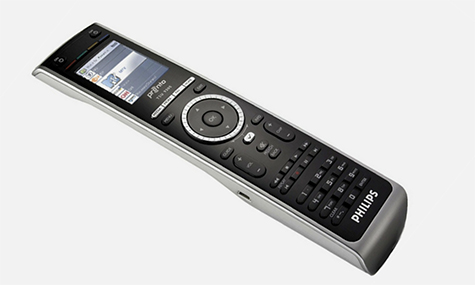
Philips did a similar thing many years ago. The Philips Pronto was a fabulous little handheld RF remote. It connected directly to AMX, Crestron and a host of other AV control systems without the need for any crazy interfaces. But, for Philips, it was simply too expensive to support and so it was culled by the bean counters.
So, we live in a world where manufacturers are fickle and profit is the key driver. The cost of three Nest thermostats goes a long way to creating a KNX heating control system which, crucially, is unlikely to become obsolete. KNX heating controls also qualify as smart controls from an EPC (Energy Performance Certificate) perspective. Properties and landlords are increasingly required to use smart home technology.
False economy
It is a very British ailment to look at cost over value. Clearly the long-term value of a KNX system far outweighs the short-term cost savings that other smart home technologies offer. It will cost more at the outset to create a heating control system using KNX, but the KNX system will still be operational in ten or more years’ time, no question. It will be capable of updates, that, for example, might be required for new government initiatives to save energy, such as the EPC or the like.
KNX for every home
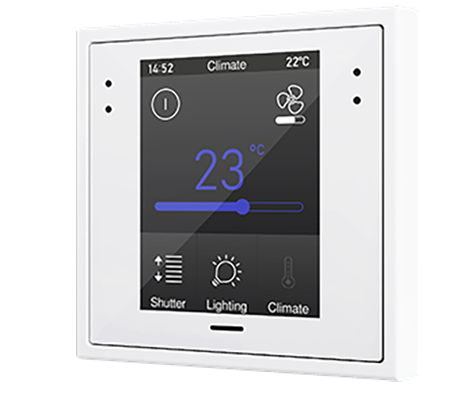
We have installed oceans of KNX into what we might call ‘high-end’ residential. But there’s a huge reason for adding it to any home. It is, quite simply, the system that has longevity, flexibility, upgradability and offers by far and away the best value for money of any system out there. The system can be made up of parts from multiple manufacturers. If the Gira heating control doesn’t quite fit the bill, then the Zennio unit may well do. Nowhere is there a system that provides so much choice of controls from hundreds of independent companies. And this for me is the key. I could go out and buy Honeywell controls, or Drayton Wiser, or Worcester Bosch and I am sure they are all competent, but once you buy into a single manufacturer solution, you are locked in. That is fine until products become obsolete (see earlier), are culled by accountants, or simply no longer fit the bill in terms of the functionality required.
Visibility
Many years ago, we discussed the possibility of a house becoming either an Apple house or a Google house. This was at a time when many companies were adding smart home technology products to their portfolios, and it seemed like only a matter of time before they ruled every aspect of technology in the home. That has not come to pass. Equally, KNX has not become the de facto heating control standard and there is, in my view, only one reason behind that – visibility. KNX is not yet an obvious choice simply because most consumers are unaware of it.
We should be talking about the KNX solution, the ROI and all the elements I have spoken of earlier in this piece. We have a great solution, it is not tied to a single manufacturer, it is multi-faceted in capability. For even the smallest and simplest heating system, KNX makes perfect sense. You are buying a solution that spans many decades, continues to improve and innovate. Once you add in all of the features and benefits, the cost of KNX doesn’t just seem to be more than reasonable, it looks like a bargain.
KNX will outlive many proprietary heating systems and will certainly outlive many a smart thermostat. We have had 2G, 3G, 4G and now 5G. From dial up modems, we are now up to Wi-Fi 7, and they keep on rolling. Each one represents a risk to the proprietary system, but an opportunity for KNX.
Conclusion
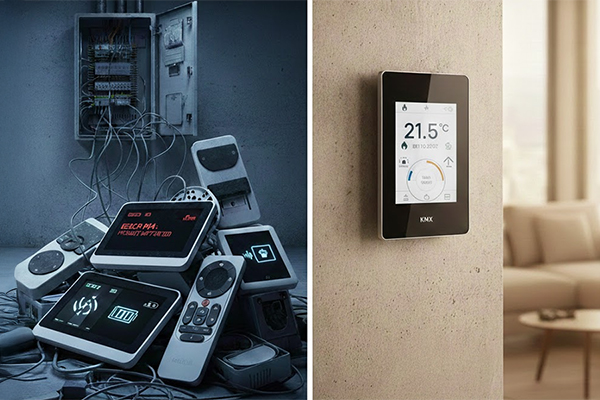
KNX is a robust and simple communications system that sits independently of any other communications layer or medium. It is scalable, upgradable, flexible and with multiple manufacturers making great products, all of which talk to each other, what’s not to like? We just have to tell the world.
Simon Buddle CEng MIET, is a consultant for Future Ready Homes, a specialist in BMS and ELV services system design.