
Lucy Han and Raimondo Salandra of ABB share how KNX, the open standard for commercial and residential building automation, is evolving with advanced security measures and energy-saving innovations to drive smarter, more sustainable buildings.
Sustainability and security: these two powerful trends are set to drive rapid growth in the global KNX building automation market in the latter half of this decade.
As more businesses and homeowners seek to integrate multiple functions – ranging from energy management and climate control to security and lighting – into a single seamless, intelligent network, the demand for smarter, more efficient buildings will continue to rise. This shift not only enhances convenience, but also optimises building performance, making automation a key enabler of sustainability and security in modern living and workspaces.
As a globally-recognised open standard for building automation, KNX enables seamless control over a wide range of functions, including lighting, blinds and shutters, heating, ventilation and air conditioning (HVAC), security systems and energy management. In commercial settings, such as office buildings, hotels, hospitals and retail spaces, KNX is proving essential in delivering energy-efficient, secure, and scalable automation systems that meet today’s performance expectations and tomorrow’s compliance demands.
Building electrification and regulatory pressure
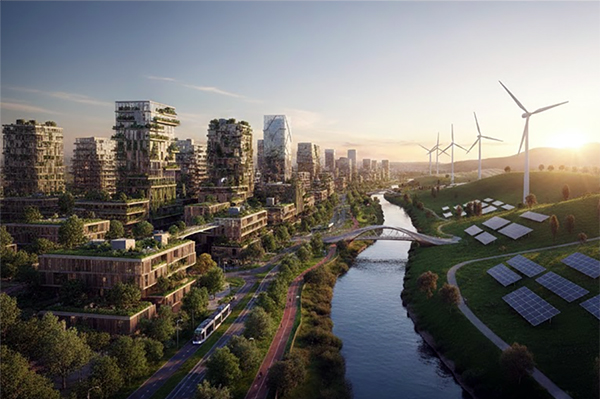
With building electrification set to rise from 20% to nearly 50% of final energy consumption by 2050 (according to IEA) and growing regulatory pressure on commercial real estate to demonstrate carbon reduction, KNX offers building owners and facility managers a future-proof solution for meeting ambitious energy and sustainability goals.
For example, advanced KNX systems can integrate occupancy sensors, smart scheduling and lighting automation to reduce energy use during non-peak hours – a critical factor in lowering operational costs and meeting green building certification standards.
Opportunities for residential and commercial buildings
As smart home trends continue to gain momentum globally, the residential automation market is also expected to see steady growth in the years ahead. KNX technology is well-positioned to support this trend, offering flexible and interoperable solutions for energy efficiency, comfort, and control, making it an excellent choice for villas, luxury residences, and large-scale residential developments.
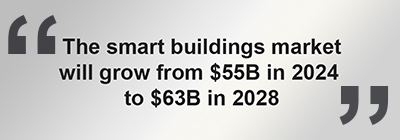
Yet it is within commercial buildings where KNX is poised to deliver some of its most transformative benefits. ABB estimates that the smart buildings market will grow from US$55 billion in 2024 to US$63 billion in 2028, based on internal analysis, with sustainability, digitalisation, and cybersecurity cited as primary investment drivers. KNX’s open, interoperable architecture makes it uniquely suited to complex commercial projects that require integration of diverse systems from multiple vendors.
KNX Secure – a safe, robust solution
Any communication technology, including smart building systems, must be secure. As smart buildings become more common, the need for enhanced measures – such as strong encryption, secure authentication and regular updates – has never been greater, both for internal data and across external IP networks.
KNX Secure offers robust protection against cyber threats and data manipulation, supporting secure operation across commercial buildings, apartments, and private residences. Advanced key management and system isolation safeguard against intrusions, whilst segment coupling enhances protection in public areas with minimal or no surveillance, ensuring a resilient and secure KNX system in any environment.
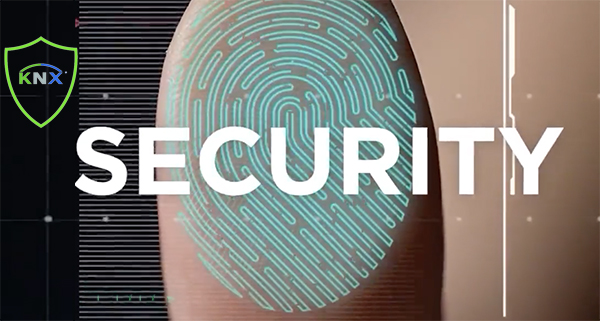
KNX Secure-enabled solutions help customers safeguard critical building operations while ensuring full compliance with emerging regulations such as the EU Cyber Resilience Act (CRA). These capabilities are integrated across its commercial and residential portfolios to deliver resilient, future-ready infrastructure.
KNX Secure covers key application scenarios in a KNX installation, including secure communication over IP with KNX IP Secure, and encrypted data exchange between end devices with KNX Data Secure. These capabilities help maintain system integrity and support compliance with emerging regulations such as the CRA.
Deeper insight and system-wide control
Beyond safeguarding infrastructure, this embedded security also lays the foundation for more intelligent, connected building operations. Combined with KNX’s open architecture and automation capabilities, it enables facility managers to gain deeper operational insights and system-wide control.
For commercial buildings, this means improved operational transparency, efficiency and responsiveness – particularly when KNX is integrated with building management systems (BMS) and facility-wide analytics platforms. From reducing carbon footprints to improving tenant safety and comfort, KNX is helping to deliver secure, smart infrastructure that meets the evolving needs of modern buildings.

Automation trends and predictions
Looking ahead, the integration of emerging technologies, such as artificial intelligence (AI), machine learning (ML), and the Internet of Things (IoT), will significantly enhance automation, delivering more intelligent, adaptive solutions that improve both building security and sustainability.
User-friendly interfaces are already making it easier for homeowners and building managers to control their automation systems through intuitive mobile apps and voice commands. Meanwhile, cloud integration is continuously expanding remote access, data storage, and additional smart services, ensuring systems remain flexible and future-ready.
KNX members are at the forefront of these trends, combining KNX with IoT-driven insights, predictive maintenance tools, and cloud-based building management platforms to help customers create smarter, safer, and more sustainable spaces.
The next phase of building automation will be driven by enhanced interoperability, with platforms like KNX enabling seamless communication across an increasing number of smart devices and systems. This will ensure greater connectivity, efficiency, and security, paving the way for smarter, more sustainable private and public spaces.
Lucy Han is the Business Line Leader, Building Automation at ABB Smart Buildings, and Raimondo Salandra is the Business Line Leader, Home Solutions, at ABB Smart Buildings. With decades of expertise in automation, energy management, and security, ABB Smart Buildings leverages open standards such as KNX to deliver sustainable, scalable, and future-ready solutions across residential and commercial environments.